How Heavy Rain Can Affect Your Plumbing
CALL (206) 789-4944
Serving the Greater Seattle Area
Heavy rainfall can put additional stress on your home’s plumbing, sewer lines, and drainage systems. In the Greater Seattle area, where prolonged wet weather is common, existing pipe damage, clogged drains, and poor drainage can become more noticeable during heavy storms.
While rain itself doesn’t necessarily cause plumbing failures, increased water flow and saturated ground can expose problems that have been developing underground for years.
Understanding how heavy rain affects your plumbing — and recognizing the early warning signs — can help you prevent sewer backups, water damage, and costly repairs.
1. Heavy Rain Can Contribute to Sewer Backups
Some Seattle neighborhoods have combined sewer systems, where stormwater and wastewater flow through shared infrastructure. Depending on your property’s drainage connections, heavy rainfall can increase the volume of water moving through your side sewer.
When underground pipes are partially blocked by tree roots, grease, debris, or other obstructions, that additional flow can overwhelm the available capacity.
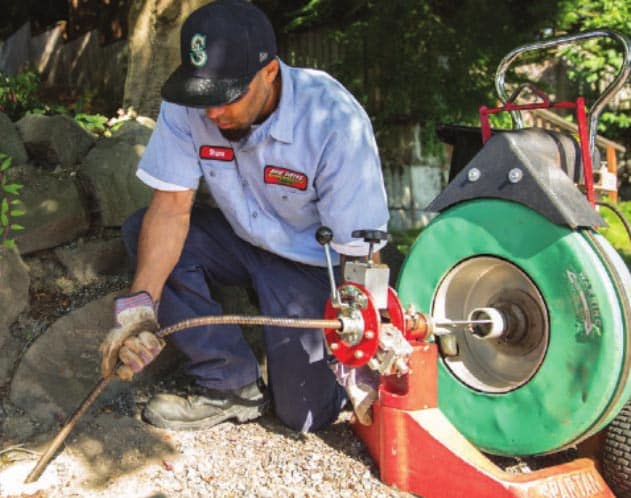
Professional drain snaking by a Bob Oates technician to help clear a clogged line.
Water may begin backing up through the lowest plumbing fixtures in your home, including basement floor drains, showers, and toilets.
Warning signs of a potential sewer backup include:
- Gurgling sounds from drains or toilets
- Slow drainage in multiple fixtures
- Unpleasant sewage odors
- Water rising in basement floor drains
- Recurring backups during heavy rainfall
If these symptoms appear, a professional sewer camera inspection can help identify blockages, damaged pipes, or other restrictions affecting drainage.
For a closer look at the causes and warning signs, read our guide to sewer backups.
2. Saturated Soil Can Affect Underground Pipes
Prolonged rainfall — something Seattle is famous for each year — saturates the soil surrounding underground plumbing and sewer lines.
As soil becomes waterlogged, changes in ground conditions can place additional stress on pipes, particularly older lines that are already cracked, deteriorating, or improperly supported.
Over time, shifting or settling soil may contribute to:
- Cracked or separated pipe joints
- Misaligned sewer connections
- Low spots where wastewater collects
- Leaks that allow surrounding soil or groundwater to enter damaged pipes
Older clay and concrete sewer lines can be especially vulnerable to deterioration and joint separation.
When groundwater enters a damaged sewer pipe, it can increase the volume of water flowing through the system, potentially contributing to backups during periods of heavy rainfall.
3. Clogged Gutters and Downspouts Can Cause Drainage Problems
Your home’s gutters and downspouts play an important role in directing rainwater away from the roof and foundation.
When leaves, pine needles, roof debris, and sediment accumulate, water may overflow instead of flowing through the intended drainage system.
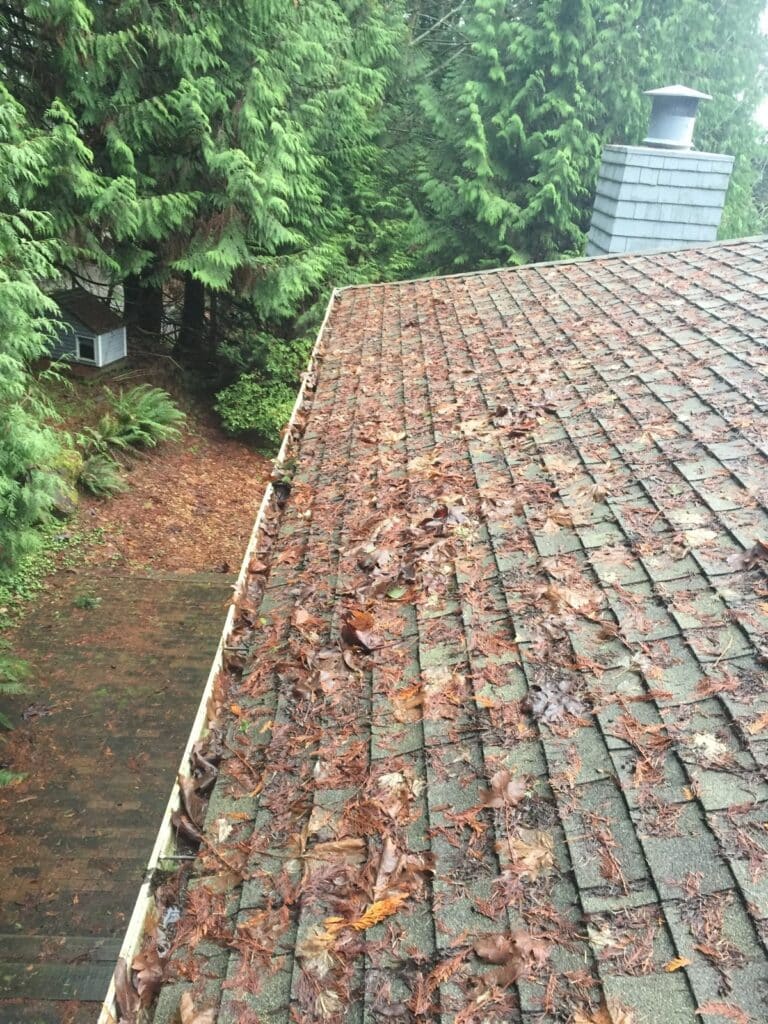
Wet leaves and roof debris collect in gutters during Seattle’s rainy season, often leading to clogged downspout lines.
Clogged underground downspout lines can create additional problems, particularly during sustained rainfall.
Common warning signs include:
- Gutters overflowing during storms
- Water pooling near the foundation
- Downspouts backing up or bubbling at cleanouts
- Soggy landscaping or soil erosion
- Water entering basements or crawl spaces
Regular gutter maintenance and professional downspout line cleaning can help keep rainwater moving where it belongs.
Learn more in our guide to maintaining your downspout lines.
4. Heavy Rain Can Expose Tree Root Problems
Invasive tree roots are a common cause of underground sewer line blockages throughout the Seattle area.
Roots naturally seek moisture and can enter pipes through cracks, loose joints, and other openings. Once inside, they continue growing and gradually restrict wastewater flow.
During dry weather, a partially obstructed sewer line may still function adequately. However, increased water volume during heavy rainfall can expose the restriction, leading to slow drains or sewage backups.
Professional rooter service and drain cleaning can remove existing obstructions, while a sewer camera inspection helps determine whether roots have entered through damaged pipe sections.
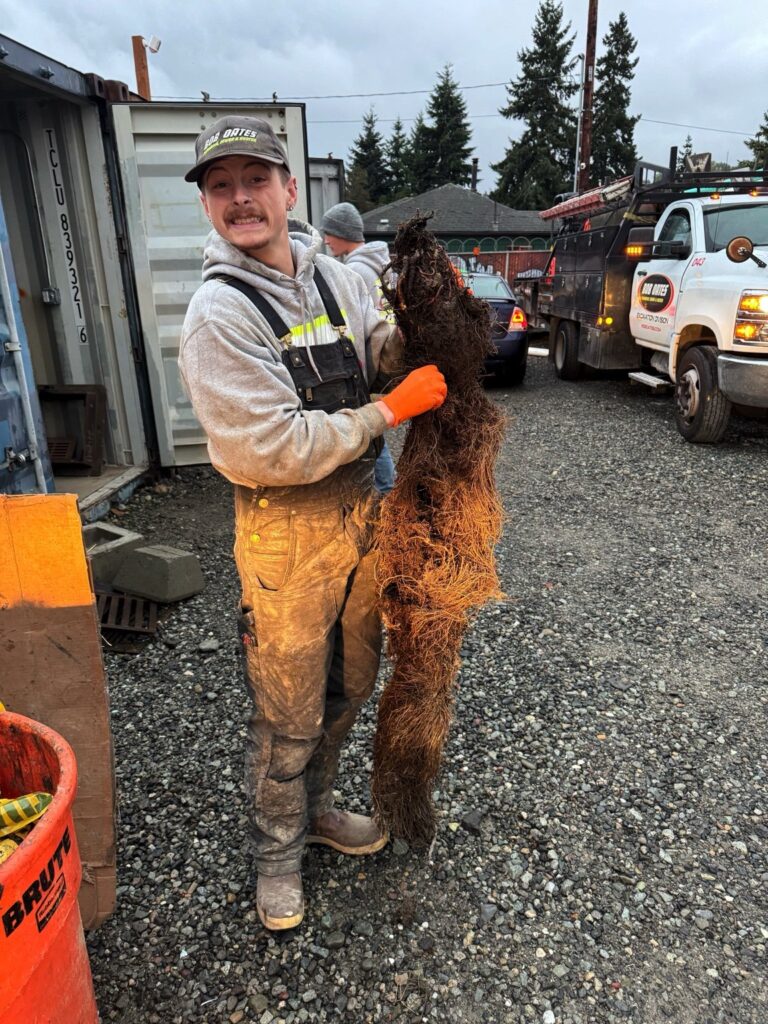
Large tree root cluster pulled from a clogged sewer line during professional drain cleaning service.
5. Blocked Storm Drains Can Increase Local Flooding
Heavy rainfall can also overwhelm neighborhood drainage systems when leaves, branches, and other debris block curbside storm drains.
When water cannot enter these drains, it may accumulate along streets, sidewalks, and driveways.
Homeowners can help reduce localized flooding by keeping nearby storm drain openings clear of leaves and loose debris when it is safe to do so.
However, avoid entering flooded streets, lifting storm drain covers, or attempting to clear drains when water is moving rapidly.
Seattle Public Utilities provides additional guidance on stormwater management and reporting drainage problems.
How to Protect Your Plumbing During Heavy Rain
A few preventive measures can help reduce the risk of rain-related plumbing and drainage problems:
- Keep gutters and downspouts clear. Remove leaves and debris before periods of sustained rainfall.
- Watch for slow drains. Recurring drainage problems may indicate restrictions in your sewer line.
- Check for standing water. Pooling near foundations, downspouts, or basement drains deserves attention.
- Address recurring root intrusion. Regular cleaning may help manage roots, but damaged pipes may require repair.
- Schedule a sewer inspection when problems persist. Identifying the cause early can help prevent more extensive damage.
If sewage begins backing up into your home, stop using plumbing fixtures connected to the affected sewer line and contact a professional for assistance.
Get Expert Plumbing and Sewer Help from Bob Oates
Heavy rainfall can reveal plumbing and drainage problems that are easy to overlook during drier weather.
At Bob Oates Plumbing, Sewer & Rooter, we help Greater Seattle homeowners identify and resolve sewer backups, clogged drains, damaged underground pipes, and other drainage concerns.
Our experienced, in-house crews provide professional drain cleaning, sewer camera inspections, sewer repairs, and trenchless pipe lining solutions.
Whether you’re experiencing recurring backups or want to investigate a potential underground plumbing problem, contact Bob Oates to schedule an inspection or request a free estimate.
Frequently Asked Questions
Can heavy rain cause a sewer backup?
Yes. Heavy rainfall can increase water flow through combined sewer systems and expose existing restrictions in residential sewer lines. Tree roots, debris, damaged pipes, and other blockages can contribute to backups, particularly through basement drains and other low-lying fixtures.
Why do my drains run slowly when it rains?
Slow drains during heavy rainfall may indicate a partially blocked sewer line, groundwater entering damaged pipes, or increased flow through a shared drainage connection. A camera inspection can help identify the underlying cause.
Can saturated soil damage underground sewer pipes?
Saturated soil can contribute to ground movement and settling, potentially stressing older or already damaged pipes in your sewer line. Cracked joints, misaligned connections, and deteriorating pipe sections may allow groundwater to enter the sewer system.
How can I prevent plumbing problems during heavy rain?
Keep gutters and downspouts clear, watch for recurring drainage problems, and address sewer line blockages before they become severe. If your home experiences repeated backups during rainfall, professional drain cleaning and a sewer camera inspection can help determine the appropriate solution.


Rated 5 Stars by Johanna G.
via Yelp.com
"Nothing but great experiences with Bob Oates! Would highly recommend for all your sewer and plumbing needs! Honest, hard working company!"

Proud Member of BOMA
CALL (206) 789-4944
Serving the Greater Seattle Area